

Choosing the best 35mm point and shoot cameras can make capturing everyday moments simple and enjoyable. These cameras offer a nostalgic film photography experience with convenient features for casual shooting, travel, and special occasions. In this guide, I’ll explore important factors such as image quality, lens performance, flash, ease of use, and overall camera design to help you choose the right option.
Things I Considered While Choosing These Products
- Image quality for clear and detailed film photographs.
- Lens quality and focal length for everyday photography.
- Autofocus performance for sharp and accurate shots.
- Built-in flash for indoor and low-light photography.
- Film loading and rewinding for convenient operation.
- Viewfinder clarity for comfortable and accurate framing.
- Battery requirements and automatic shooting features.
- Compact design and portability for travel and daily use.
Best 35mm Point And Shoot Camera
Best 35mm Point And Shoot Camera
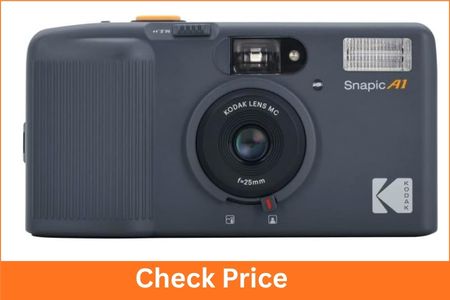
1. KODAK Snapic A1 Reusable Lightweight Compact 35Mm Point And Shoot Camera
| Specification | Details |
|---|---|
| Brand | KODAK |
| Model | Snapic A1 |
| Lens | 25mm 3-Element Glass Lens |
| Focus System | 2-Zone Manual Focus |
| Film Format | Full-Frame 35mm |
| Shutter Speed | 1/100 Second |
| Power Source | 2 AAA Batteries |
| Weight | 4.1 Ounces |
I appreciate the secure packaging and neatly arranged accessories. The KODAK Snapic A1 comes in Rhino Grey, but film and two AAA batteries need to be purchased separately. I find its initial setup straightforward.
Design and Build: I like the minimalistic appearance and compact body, measuring 4.65 × 2.44 × 1.38 inches. At 4.1 ounces, its lightweight construction makes carrying convenient. I find this combination of modern styling and traditional film photography appealing. However, I would handle the plastic body carefully to avoid potential damage.
Lens Quality: I appreciate the 25mm three-element glass lens because it provides a useful optical setup for an entry-level film camera. Its glass construction is a notable feature compared with basic plastic lens alternatives.
Focusing Performance: I like the two-zone manual focusing system with portrait and landscape settings. I find this arrangement simple for casual photography, although the lack of continuous autofocus and precise distance adjustments limits focusing flexibility.
Film Handling: I appreciate the automatic film winding and rewinding because they reduce manual effort. The manual force-rewind option also provides additional flexibility when handling a film roll.
Flash Performance: I like the built-in automatic flash, red-eye reduction, and manual on/off selection. The multiple-exposure feature is another useful addition, allowing two scenes to be layered into one frame.
Photo Quality: The fixed 1/100-second shutter and F9.5 aperture keep operation simple. I prefer brighter outdoor conditions for more consistent photographs.
Portability and Battery Life: I find its pocket-friendly size convenient for travel. Two AAA batteries provide an estimated battery life of around ten 24-exposure rolls.
Pros
- Lightweight and pocketable design
- 25mm three-element glass lens
- Simple two-zone focusing system
- Automatic film winding and rewinding
- Manual force-rewind option
- Built-in flash with red-eye reduction
- Creative multiple-exposure feature
- Standard AAA battery compatibility
Cons
- Plastic construction receives mixed feedback
- Film and batteries are not included
2. KODAK Snapic A1 Reusable Compact Film 35mm Point And Shoot Camera

| Specification | Details |
|---|---|
| Brand | KODAK |
| Model | Snapic A1 |
| Lens | 25mm 3-Element Glass Lens |
| Focus System | 2-Zone Manual Focus |
| Film Format | 35mm Full-Frame |
| Shutter Speed | Fixed 1/100 Second |
| Special Features | Built-In Flash, Red-Eye Reduction, Multiple Exposure |
| Weight | 4.1 Ounces |
The delivery was prompt, and the box was sealed well to keep every component protected. The KODAK Snapic A1 comes with a camera strap, but the single-camera package does not include film or batteries. I would prepare a compatible 35mm film roll and two AAA batteries before using it. The separate film bundle is an option for buyers who prefer to receive film with the camera.
Design and Build: I like the compact, minimalist appearance, available in Ivory White and Rhino Grey. Measuring 4.65 × 2.44 × 1.38 inches and weighing 4.1 ounces, it is easy to carry in a pocket or small bag. The plastic construction keeps it lightweight, although feedback about build quality is mixed. I find the design practical for casual photography, but I would handle it carefully.
Lens Quality: The 25mm three-element glass lens is a useful feature. I appreciate the glass optics because they provide a more substantial lens setup than basic plastic alternatives. Customer experiences with image sharpness vary, so expectations should remain realistic.
Focusing Performance: The two-zone manual focus system offers portrait and landscape settings. I find this simple arrangement suitable for beginners, although choosing the correct distance setting requires attention. This 35mm point and shoot camera provides basic focusing control without complicated adjustments.
Film Handling: Automatic film winding and rewinding make everyday operation easier. I particularly like that the camera advances the film after each shot, reducing manual handling.
Flash Performance: The built-in flash includes automatic detection, manual on/off selection, and red-eye reduction. These options offer flexibility, although lighting conditions can still affect results.
Photo Quality: The fixed 1/100-second shutter and F9.5 aperture keep photography straightforward. I like the multiple-exposure feature for creative layered images, but limited exposure control makes sunny outdoor conditions a more suitable choice.
Portability: Overall, I find this camera appealing for travel, everyday moments, and beginner film photography. Its lightweight body and convenient automatic functions make it easy to carry, though mixed reliability feedback is worth considering.
Pros
- Lightweight and pocketable design
- Three-element glass lens
- Simple two-zone focusing system
- Automatic film winding and rewinding
- Built-in flash with red-eye reduction
- Creative multiple-exposure feature
- Beginner-friendly point-and-shoot operation
- Available in two color options
Cons
- Plastic construction receives mixed feedback
- Film and AAA batteries are sold separately
3. KODAK Snapic A1 Ultramax Film Bundle 35mm Point And Shoot Camera

| Specification | Details |
|---|---|
| Brand | KODAK |
| Model | Snapic A1 |
| Lens | 25mm 3-Element Glass Lens |
| Focus System | 2-Zone Manual Focus |
| Film Format | Full-Frame 35mm |
| Shutter Speed | Fixed 1/100 Second |
| Special Features | Auto Flash, Red-Eye Reduction, Multiple Exposure |
| Weight | 4.1 Ounces |
My order arrived two days early. I appreciate the included KODAK Snapic A1 camera and Kodak Ultramax 400 24-exposure film. However, two AA batteries must be purchased separately before use.
Design and Build: I like the compact design, measuring 4.65 × 2.44 × 1.38 inches and weighing 4.1 ounces. The Ivory White and Rhino Grey finishes look simple and attractive. Its long strap also makes carrying convenient around my neck or over my shoulder. However, the battery compartment latch and overall durability are worth considering.
Lens Quality: The 25mm three-element glass lens is a useful feature. I appreciate its optical construction, although image sharpness can depend on lighting and shooting conditions.
Focusing Performance: I find the two-zone manual focusing system straightforward, with portrait and landscape settings. Choosing the appropriate distance requires some attention.
Film Handling: I appreciate automatic film loading, winding, and rewinding. Automatic film advancement after each shot also reduces manual effort.
Flash Performance: I like the built-in automatic flash, red-eye reduction, and manual on/off selection. However, its effectiveness may be limited in some low-light situations.
Photo Quality: The fixed 1/100-second shutter and F9.5 aperture simplify shooting. I also appreciate the multiple-exposure feature for creative photographs, although exposure control is limited.
Portability: This 35mm point and shoot camera offers convenient portability for travel, family occasions, and everyday photography. Its lightweight construction makes carrying easier, although reliability is worth considering.
Pros
- Lightweight and compact design
- Three-element glass lens
- Simple two-zone focusing
- Automatic film winding and rewinding
- Built-in flash with red-eye reduction
- Multiple-exposure creative feature
- Kodak Ultramax 400 film included
- Long strap for flexible carrying
Cons
- Batteries are not included
4. KODAK EKTAR H35 Half-Frame Focus-Free 35mm Point And Shoot Camera

| Specification | Details |
|---|---|
| Brand | KODAK |
| Model | EKTAR H35 |
| Film Format | 35mm Half-Frame |
| Focus System | Fixed Focus |
| Shutter Speed | 1/100 Second |
| Aperture | F9 |
| Flash | Built-In Manual Flash |
| Weight | 3.53 Ounces |
The product was securely packed, and everything inside was neatly organized. The KODAK EKTAR H35 comes with a camera body and a small drawstring carry bag. Film and one AAA battery are not included. I would purchase both separately before using it. Its simple design makes the initial setup manageable for someone beginning film photography.
Design and Build: I like the lightweight, compact construction, which measures 4.33 × 1.77 × 2.56 inches and weighs just 3.53 ounces. The Sage finish gives it a pleasant appearance, and other color options include Black, Off-white, Brown, and Sand. However, the plastic body feels less sturdy than premium cameras, so careful handling is important.
Lens Quality: The fixed-focus design keeps operation simple without requiring manual adjustments. I appreciate this straightforward approach for everyday snapshots, although it is better suited to general photography than close-up subjects.
Focusing Performance: With its focus-free system and fixed 1/100-second shutter, the camera is designed for uncomplicated shooting. I find this beginner-friendly arrangement useful when capturing casual outdoor moments without changing settings.
Film Handling: The half-frame format is one of my favorite features. A standard 36-exposure roll can produce approximately 72 photographs, making film more economical. I also like the manual wind-and-rewind mechanism, although it requires attention when loading and unloading.
Flash Performance: The built-in flash switches on through the silver ring around the lens. It offers additional lighting for darker situations, but some users report battery drain and occasional flash failures.
Photo Quality: I appreciate the nostalgic film appearance and the reported results in bright outdoor conditions. However, low-light photography can be challenging, so I would prioritize sunny environments.
Portability: Overall, this 35mm Point And Shoot Camera is a convenient choice for beginners, travel, and casual photography. Its affordability and half-frame economy are appealing, but battery and durability concerns deserve consideration.
Pros
- Lightweight pocket-sized construction
- Economical half-frame photography
- Up to 72 photos per 36-exposure roll
- Simple fixed-focus operation
- Built-in manual flash
- Easy film winding mechanism
- Five available color options
- Reusable camera design
Cons
- Film and AAA battery not included
- Plastic construction and flash reliability concerns
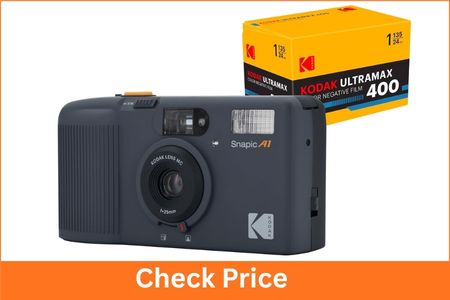
5. KODAK Snapic A1 Ultramax Reusable Compact 35mm Point And Shoot Camera
| Specification | Details |
|---|---|
| Brand | KODAK |
| Model | Snapic A1 |
| Film Format | 35mm Full-Frame |
| Lens | 25mm 3-Element Glass Lens |
| Focus Type | Manual 2-Zone Focus |
| Shutter Speed | Fixed 1/100 Second |
| Flash | Built-In Auto Flash with Red-Eye Reduction |
| Weight | 117g (4.1 oz) |
My order arrived two days ahead of schedule. I appreciate the included KODAK Snapic A1 camera, Kodak Ultramax 400 24-exposure film, and carrying strap. However, two AAA alkaline batteries must be purchased separately.
Design and Build: I like the lightweight ABS plastic body, measuring 118 × 62 × 35mm and weighing 4.1 ounces. The Rhino Grey finish gives it a simple appearance, while its compact design makes carrying convenient during travel and everyday outings.
Lens and Image Quality: The 25mm three-element glass lens with an F9.5 aperture provides a straightforward photography setup. I appreciate the multiple-exposure functionality, which allows up to two exposures on one frame and creates opportunities for creative photographs.
Focusing Performance: I find the manual two-zone focusing system practical. The close setting covers 0.5–1.5 meters, while the distant setting covers 1.5 meters to infinity. Switching between these options makes different shooting distances easier to manage.
Flash Performance: I like the built-in flash with automatic and manual options and red-eye reduction. These features provide useful flexibility for indoor and low-light photography.
Film Handling: Automatic film loading, advancing, and rewinding simplify the process. I also appreciate having an Ultramax 400 film roll included.
Ease of Use: This 35mm point and shoot camera offers compact portability and beginner-friendly controls. However, battery-latch problems and occasional operational failures are worth considering before purchasing.
Pros
- Lightweight and compact design.
- Three-element glass lens.
- Convenient two-zone focusing.
- Automatic film loading and rewinding.
- Built-in flash with red-eye reduction.
- Multiple exposure capability.
- Includes Kodak Ultramax 400 film.
- Suitable for travel and casual photography.
Cons
- Two AAA batteries are not included.
6. KODAK EKTAR H35 Ultramax Film Bundle 35mm Point And Shoot Camera

| Specification | Details |
|---|---|
| Brand | KODAK |
| Model | Snapic A1 |
| Film Format | 35mm Full-Frame Film |
| Lens | 25mm, 3-Element Glass Lens |
| Focusing System | Two-Zone Manual Focus |
| Shutter Speed | Fixed at 1/100 Second |
| Aperture | Fixed at f/9.5 |
| Power Source | 2 AAA Batteries, Not Included |
I appreciate the neatly organized packaging. The KODAK Snapic A1 bundle includes the camera, strap, pouch, and Kodak Ultramax 400 film with 24 exposures. However, two AAA batteries must be purchased separately.
Design and Build: I like the compact, lightweight design because it is convenient for everyday outings and travel. The Rhino Grey finish gives it a distinctive appearance. However, the plastic construction makes long-term durability worth considering.
Lens and Image Quality: The 25mm three-element glass lens provides a suitable setup for everyday scenes, travel memories, and casual photographs. I appreciate the traditional 35mm full-frame format, although low-light image quality may be limited.
Focusing Performance: I find the two-zone manual focusing system straightforward, with nearby and distant subject settings. It makes photography easier for beginners, although focusing precision is more limited than advanced camera systems.
Flash Performance: I like the built-in automatic flash and red-eye reduction for indoor photography. These features make this 35mm point and shoot camera convenient for casual shooting, although results depend on lighting conditions.
Film Handling: I appreciate automatic film loading, advancing, and rewinding because they reduce manual work. The multiple-exposure mode also offers creative photography possibilities.
Ease of Use: I like the fixed shutter speed and simple focusing arrangement. However, battery-compartment reliability is worth checking before important photography sessions.
Add a concise closing assessmentClarify the battery-compartment concern
Pros
- Compact and lightweight design
- 25mm three-element glass lens
- Standard 35mm full-frame format
- Automatic film loading
- Automatic film advance
- Automatic film rewind
- Built-in flash with red-eye reduction
- Multiple-exposure mode
Cons
- AAA batteries are not included
- Some users report battery-compartment and reliability issues
7. KODAK Reusable Focus-Free Beginner-Friendly Compact 35mm Point And Shoot Camera

| Specification | Details |
|---|---|
| Brand | KODAK |
| Model | EC35 |
| Film Format | 35mm |
| Lens | 25mm, 2-Element Acrylic Lens |
| Focus System | Fixed Focus |
| Aperture and Shutter Speed | Fixed f/10 and 1/100 Second |
| Flash | Built-In Flash with Automatic and Manual Control |
| Power Source | 1 × AA Battery (Not Included) |
I appreciate the prompt delivery and secure packaging. The KODAK EC35 includes the camera body and a strap. However, 35mm film and one AA battery must be purchased separately before use.
Design and Build: I like the lightweight ABS plastic body and Avocado Green finish. The sliding lens cover protects the lens and doubles as a shutter lock to prevent accidental shots. Its compact shape also makes carrying convenient in a pocket or bag.
Lens and Image Quality: The 25mm two-element acrylic lens provides a wide-angle view for street photography, portraits, and everyday snapshots. I appreciate the simple optical setup, while the F10 aperture and 1/100-second shutter speed keep operation straightforward. However, lighting conditions and film selection can affect image results.
Focusing Performance: I find the fixed-focus system convenient because it eliminates manual adjustments. This 35mm point and shoot camera suits beginners, although it offers limited creative control. Choosing appropriate subject distances helps achieve better results.
Flash Performance: I like the built-in flash with automatic activation in dim conditions and manual on/off control. However, checking its operation before important occasions is worthwhile.
Film Handling: Manual winding and rewinding give me a traditional analog photography experience, although advancing the film requires attention after each shot.
Ease of Use: I appreciate the simple controls and fixed exposure settings. However, manual exposure adjustments are unavailable, and photographs require film development before viewing.
Pros
- Lightweight and portable design
- Attractive Avocado Green finish
- Protective sliding lens cover
- Wide-angle 25mm lens
- Simple fixed-focus operation
- Built-in flash with automatic activation
- Manual flash control
- Traditional manual film transport
Cons
- Film and AA battery are not included
- Limited creative control
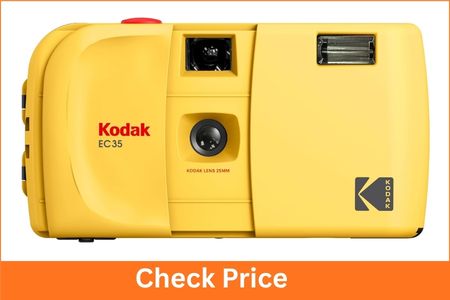
8. KODAK EKTAR H35 Focus-Free Lightweight 35mm Point And Shoot Camera
| Specification | Details |
|---|---|
| Brand | KODAK |
| Model | EC35 |
| Film Format | 35mm Full-Frame |
| Lens | 25mm, 2-Element Acrylic Lens |
| Focus System | Fixed Focus |
| Aperture and Shutter Speed | Fixed f/10 and 1/100 Second |
| Flash | Built-In Flash with On/Off Control |
| Power Source | 1 × AAA Battery (Not Included) |
I appreciate the prompt delivery and secure packaging. The KODAK EC35 includes the camera body and a strap. Film and the required battery must be purchased separately. Its reusable design allows easy film replacement.
Design and Build: I like the lightweight ABS plastic body and compact shape, which make carrying convenient. The Butter Yellow finish adds a retro appearance. The sliding lens cover protects the lens and works as a shutter lock. Although seven color options are available, the plastic construction raises some durability concerns.
Lens and Image Quality: The 25mm two-element acrylic lens provides a wide-angle view for street photography, portraits, and casual snapshots. I appreciate the nostalgic film appearance, although image results may vary.
Focusing Performance: The fixed-focus system eliminates manual adjustments, making everyday photography easier. However, limited focusing control makes close-up shots less convenient.
Flash Performance: I like the built-in flash and manual on/off control for indoor photography. However, understanding its operation may require practice.
Film Handling: Manual winding and rewinding provide a traditional shooting experience. I find the process simple, although advancing the film after every shot requires attention.
Ease of Use: I appreciate the straightforward controls and fixed exposure settings. This 35mm point and shoot camera is suitable for casual photography, family gatherings, and travel.
Pros
- Lightweight and compact design
- Seven attractive color options
- Protective sliding lens cover
- Wide-angle 25mm lens
- Beginner-friendly fixed-focus operation
- Built-in flash with on/off control
- Reusable 35mm film format
- Simple manual film transport
Cons
- Film and battery are not included
9. KODAK Reusable Focus-Free Compact Beginner-Friendly 35mm Point And Shoot Camera

| Specification | Details |
|---|---|
| Brand | KODAK |
| Model | EKTAR H35 |
| Film Format | 35mm Half-Frame |
| Lens | 22mm Fixed-Focus Lens |
| Shutter Speed | Fixed 1/100 Second |
| Flash | Built-In Flash with Manual On/Off Control |
| Weight | 100g (3.53 oz) |
| Power Source | 1 × AAA Battery (Not Included) |
I appreciate the prompt delivery and secure packaging. The KODAK EKTAR H35 comes with a camera kit, but film and an AAA battery must be purchased separately. Its reusable design allows easy film replacement.
Design and Build: I like the compact, lightweight plastic body because it is convenient to carry in a pocket or travel bag. The Sand finish adds a simple retro appearance, although the plastic construction raises some durability concerns.
Lens and Image Quality: The fixed-focus lens suits casual outdoor photography. I appreciate the soft, grainy appearance that creates nostalgic photographs. However, low-light performance may be limited.
Focusing Performance: The focus-free design makes photography straightforward without manual adjustments. However, close-up photography is not its strongest capability.
Flash Performance: I like the built-in flash controlled through the silver lens ring. However, battery consumption and flash reliability are worth considering.
Film Handling: The half-frame format captures two images per standard frame, potentially providing around 72 pictures from a 36-exposure roll. I find this economical for regular photography.
Ease of Use: I appreciate the simple loading and winding process, although the exposure counter can be difficult to read.
Pros
- Around 72 photos from a 36-exposure roll
- Lightweight and pocket-friendly design
- Easy point-and-shoot operation
- Reusable 35mm film format
- Nostalgic vintage photo appearance
- Built-in flash with manual control
- Simple manual film winding
- Suitable for casual outdoor photography
Cons
- Flash may drain batteries quickly or stop working
- Plastic construction and battery compartment raise durability concerns
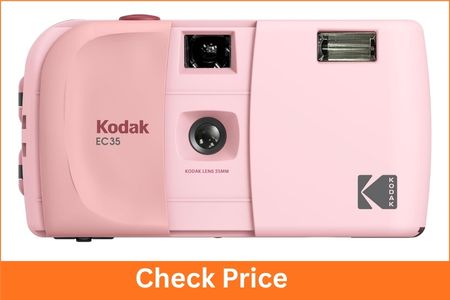
10. KODAK Reusable Focus-Free Compact Beginner-Friendly 35mm Point And Shoot Camera
| Specification | Details |
|---|---|
| Brand | KODAK |
| Model | EC35 |
| Film Format | 35mm Full-Frame |
| Lens | 25mm 2-Element Acrylic Wide-Angle Lens |
| Focus Type | Fixed Focus, 9 Feet to Infinity |
| Shutter Speed | Fixed 1/100 Second |
| Flash | Built-In Flash with Manual On/Off |
| Weight | 102g (3.6 oz) |
My order arrived on schedule, and I appreciate the sturdy packaging. The package includes the KODAK EC35 camera and a camera strap. However, film and one AA battery are not included and need to be purchased separately. I also like the available color options, including Blush Pink, Butter Yellow, Powder Blue, and Vanilla White.
Design and Build: I like the compact ABS plastic body because it keeps the camera lightweight and easy to carry. The sliding lens cover protects the lens and works as a shutter lock to prevent accidental pictures. The colorful design, particularly Blush Pink, gives it an appealing nostalgic appearance.
Lens and Image Quality: The 25mm wide-angle lens features two optical-grade acrylic elements and an F10 aperture. I find this combination suitable for capturing street scenes and portraits. The vintage film appearance adds a classic photographic style, although image quality may vary between individual units.
Focusing Performance: The fixed-focus system covers distances from approximately 9 feet to infinity. I appreciate its simplicity, although the lack of manual adjustment limits close-up photography.
Flash Performance: The built-in flash offers manual on/off control. I like having this option for indoor photography, but its operation may require some attention.
Film Handling: Standard 35mm film and manual winding provide a traditional photography experience.
Ease of Use: I appreciate the simple controls, lightweight design, and colorful appearance. However, reported shutter and flash issues make checking the camera’s operation important.
Pros
- Easy operation for beginners.
- Lightweight and compact design.
- Attractive color options.
- 25mm wide-angle lens.
- Built-in flash for indoor photography.
- Protective sliding lens cover.
- Standard 35mm film compatibility.
- Nostalgic vintage-style photos.
Cons
- Film and AA battery are not included.
- Some users report flash or shutter malfunctions.
How to Choose the Best 35mm Point And Shoot Camera
Image Quality
Image quality is one of the first factors I consider when choosing a film camera. I look for cameras that can capture clear details, natural colors, and balanced contrast. Lens quality and film compatibility also influence the final photographs, so I consider these features based on my photography needs.
Lens Performance
The lens plays an important role in determining how photographs look. I consider focal length, aperture, and lens construction before making a choice. A suitable lens should work well for everyday photography, portraits, landscapes, and casual travel shots.
Autofocus System
A reliable autofocus system makes photography easier, especially when capturing moving subjects or spontaneous moments. I check whether the camera offers automatic focusing and whether its focusing system is suitable for different shooting distances. Consistent focusing performance helps produce sharper photographs.
Built-In Flash
Flash functionality is useful when taking pictures indoors, at night, or in poorly lit environments. I look for cameras with built-in flash and convenient flash settings. Different flash modes can provide more flexibility depending on the lighting conditions and photography situation.
Film Loading and Rewinding
I prefer cameras with straightforward film loading and rewinding mechanisms. Automatic film advancement can make the shooting process more convenient, particularly for beginners. Before choosing, I check whether the camera supports automatic or manual film rewinding and how easily the film compartment can be accessed.
Viewfinder and Controls
A clear viewfinder helps me frame subjects accurately before taking pictures. I also consider the placement and simplicity of the camera controls. Easy-to-understand buttons and straightforward shooting settings make a camera more comfortable for everyday photography.
Battery and Portability
Battery requirements are another important consideration because some cameras depend on batteries for autofocus, flash, and automatic film operations. I check the required battery type and availability. When comparing the 35mm Point And Shoot Camera options, I also consider compact dimensions, weight, and portability for travel and daily use.
Build Quality and Durability
I look for a camera with sturdy construction that can handle regular use. Body materials, button quality, lens protection, and battery compartment design are worth checking. A well-built camera can provide a more dependable photography experience over time.
Choosing the right 35mm Point And Shoot Camera becomes easier when I compare image quality, lens performance, focusing, flash, and everyday convenience together. I also consider my budget and preferred photography style before making a final decision.
FAQs About the Best 35mm Point And Shoot Camera
Question: What is a 35mm point and shoot camera?
Answer: A 35mm point and shoot camera is a compact film camera designed for simple photography. It typically offers automatic focusing, exposure, and film advancement, making it convenient for everyday picture-taking.
Question: Are 35mm point and shoot cameras good for beginners?
Answer: Yes, these cameras are suitable for beginners because many models have automatic settings that reduce the need for manual adjustments. They make learning film photography easier.
Question: What film does a 35mm point and shoot camera use?
Answer: Most standard models use 35mm film rolls. However, it is important to check the camera’s specifications to confirm film compatibility before purchasing.
Question: Do 35mm point and shoot cameras need batteries?
Answer: Most automatic models require batteries to operate features such as autofocus, flash, and film advancement. Battery types and requirements vary by camera.
Question: Can I use a 35mm point and shoot camera at night?
Answer: Yes, many models include a built-in flash for low-light photography. However, results depend on flash range, lens performance, film speed, and available lighting.
Question: Do 35mm point and shoot cameras have autofocus?
Answer: Many models feature automatic focusing systems that help capture sharp photographs without manually adjusting the lens. Some older or simpler models may use fixed-focus lenses instead.
Question: How many pictures can a 35mm film roll take?
Answer: Common 35mm film rolls are available in 24-exposure and 36-exposure options. The number of photographs depends on the film roll and camera compatibility.
Question: Are 35mm point and shoot cameras suitable for travel?
Answer: Yes, their compact designs make many models convenient for travel, vacations, and everyday photography. They are generally easy to carry in a small bag or pocket, depending on the model.
Question: How do I maintain a 35mm point and shoot camera?
Answer: Keep the lens clean, protect the camera from moisture and dust, and store it in a dry place. Remove the batteries during long periods of storage if recommended by the manufacturer.
Question: Are 35mm point and shoot cameras still worth buying?
Answer: Yes, a 35mm point and shoot camera can be worthwhile for people who enjoy film photography and nostalgic image styles. Consider film availability, processing costs, camera condition, and features before purchasing.